- Phone : 9136013711 / 9821338361
- Email : response@upshygiene.co.in


Effective reprocessing of reusable medical and surgical instruments is an essential component of infection prevention and patient safety. Medical instruments can come into contact with blood, body fluids, tissue and other organic contaminants during clinical procedures. Therefore, appropriate cleaning, disinfection and, where required, sterilization are critical before instruments are reused.
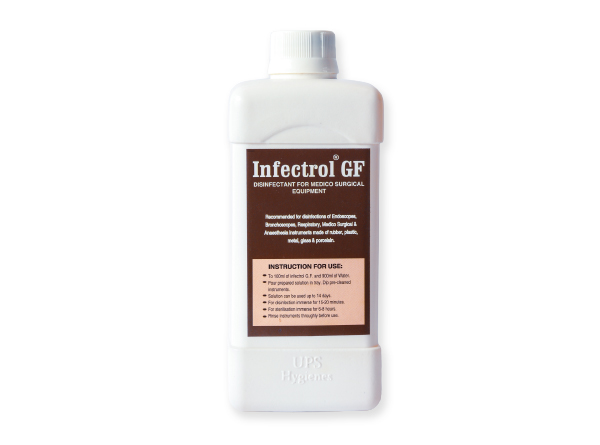
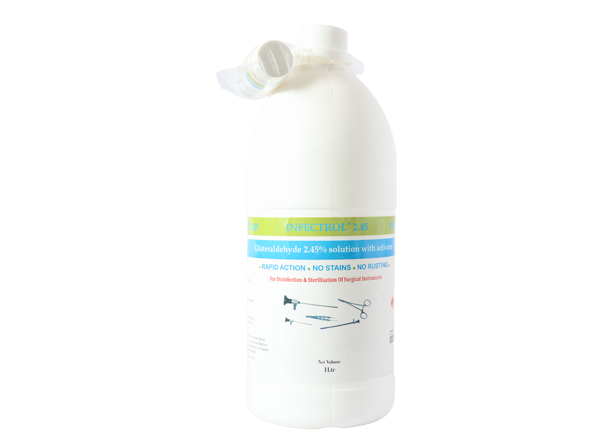
UPS Hygiene offers a range of medical instrument disinfection solutions designed for healthcare environments, including solutions for medical and surgical instruments and selected high-level disinfection or sterilization applications.
The UPS Hygiene portfolio includes Infectrol GF, Infectrol 2.45 and related instrument-care solutions, supported by the company's expertise in chemistry, formulation and microbiology.
Reusable instruments require an appropriate reprocessing protocol after use. Organic soil, blood, protein residues and other contaminants can interfere with subsequent disinfection or sterilization if instruments are not properly cleaned.
A reliable instrument reprocessing process generally involves:
The exact procedure depends on the type of instrument, its intended use, manufacturer's instructions and the selected disinfectant.
UPS Hygiene's medical instrument disinfectant category includes products intended for applications involving medical and surgical instruments.
The UPS Hygiene product portfolio identifies Infectrol 2.45 as an instrument sterilization liquid and Infectrol GF as a concentrated instrument sterilization liquid.
Medical instrument disinfectants may be relevant to:
Disinfection should not be considered a substitute for appropriate cleaning.
Residual blood, tissue, protein and other organic matter can remain on instruments after use. Thorough cleaning helps remove soil and prepares the instrument surface for the subsequent disinfection or sterilization process.
UPS Hygiene itself advises that instruments and surfaces should be clean before disinfection and notes that better cleaning contributes to better disinfection.
For complex instruments, appropriate enzymatic cleaning may be required before the disinfection stage.
High-level disinfection and sterilization are not interchangeable terms.
The required level of reprocessing depends on the instrument, its intended use and the manufacturer's validated reprocessing instructions.
Critical instruments that enter sterile tissue or the vascular system generally require sterilization, while other categories of reusable medical devices may require appropriate levels of disinfection according to their intended use.
Healthcare professionals should always follow the instrument manufacturer's instructions for use (IFU), the disinfectant product label and the healthcare facility's validated reprocessing protocol.
UPS Hygiene is promoted by professionals with expertise in chemistry, formulation and microbiology, supporting its infection-control product portfolio.
The company manufactures products covering instrument disinfection, enzymatic cleaning, surface disinfection, environmental disinfection and instrument-care applications.
UPS Hygiene states that product validation reports, MSDS and COA are available on request.
Selection should consider:
A medical instrument disinfectant is a chemical preparation used during the reprocessing of reusable medical instruments to reduce or eliminate microorganisms according to its validated intended use and label instructions.
Yes. Cleaning is an important step before disinfection. Organic material and soil can interfere with the effectiveness of subsequent disinfection.
No. Cleaning primarily removes visible soil and organic/inorganic material, whereas disinfection is intended to inactivate microorganisms to the level specified for the product and application.
Not necessarily. Instrument materials, design, intended use and manufacturer recommendations vary. Compatibility and validated reprocessing instructions should always be checked.
High-level disinfection is a defined level of microbial inactivation used for appropriate reusable medical devices. It should be performed using a product and process validated for the intended application.
No. Disinfection and sterilization have different definitions and intended applications. The required process depends on the classification and intended use of the medical device.
Some products may be suitable for dental instruments, depending on their intended use, compatibility and product instructions. The UPS Hygiene portfolio includes products intended for medical and dental instrument applications.
Contact time is critical. The product must remain in contact with the instrument for the duration specified in the validated product instructions.
Hospitals should evaluate efficacy claims, intended application, concentration, contact time, material compatibility, safety information, storage conditions, documentation and compatibility with their existing reprocessing protocol.
UPS Hygiene states that product validation reports, MSDS and COA are available on request.
For hospitals, clinics, dental centers and healthcare facilities, selecting an appropriate instrument disinfectant is an important part of a structured infection-control and instrument-reprocessing programme.
Designed & Hosted By : MID